
Levels of Care
Virtual IOP in Wyoming.
The full structure of our intensive outpatient program, delivered by secure video wherever you are in the state.

Rural access
The nearest program should not be a three-hour drive.
Wyoming's distances are the whole problem. A program that meets three to five days a week stops being realistic when the nearest one is two hours of highway each way, and for part of the year the road decides anyway. The Redpoint Center's Virtual Intensive Outpatient Program removes the drive. It is our IOP, delivered over secure video, open to anyone physically located in Wyoming, whether that is Cheyenne, Casper, Jackson, or a town the highway only passes through. Shift schedules in the energy basins and ranch work do not bend around a commute, and this program does not ask them to.
The obvious worry is that a screen buys you a lesser version of the program. The evidence does not support that. A systematic review of telemedicine for substance use treatment covering 13 studies, 7 of them randomized controlled trials, found that no study observed a significant difference in substance use outcomes between in-person care and telehealth, with treatment satisfaction and therapeutic alliance generally comparable and two studies reporting better retention on telehealth. The American Psychological Association describes the same finding in mental health care, where telehealth is essentially as effective as face-to-face psychotherapy, with higher retention rates. Closest to home, a review of 15 studies of telehealth in rural American communities found positive outcomes, improved access, and higher satisfaction. Our in-person IOP page sets out what intensive outpatient care involves in full.
- The nearest program is hours of highway away
- Shift work in the energy basins will not bend around a commute
- Winter roads make a fixed weekly schedule unreliable
- You are caring for children or family during the day
Substance use and mental health
What we treat in Virtual IOP.
The same conditions we treat in our Colorado offices, using the same evidence-based modalities.
Substance use disorders
Comprehensive care for addiction to alcohol, opioids, stimulants, and other substances.
Anxiety disorders
Treatment for PTSD, OCD, panic disorders, and related anxiety conditions.
Depressive disorders
Support for major depression, bipolar disorder, and other mood disorders.
Co-occurring disorders
Integrated dual diagnosis treatment when a mental health condition and substance use are happening together.
Getting set up
How virtual care works.
There is less to it than most people expect. Our admissions team walks you through each step before your first session.
- 1
Check that Virtual IOP fits
About 10 minutesCall (303) 219-0973 or send an insurance verification form. Admissions talks through what you are facing and confirms Virtual IOP is the right level of care, or points you to the one that is.
- 2
Confirm you are set up
You need a stable internet connection, a device with a camera, and a private space where you can speak freely. Basic familiarity with digital tools is enough. Nobody is expected to be technical.
- 3
Build your schedule
We set your sessions around work, school, and family: mornings or evenings, three to five days a week.
- 4
Join your first session
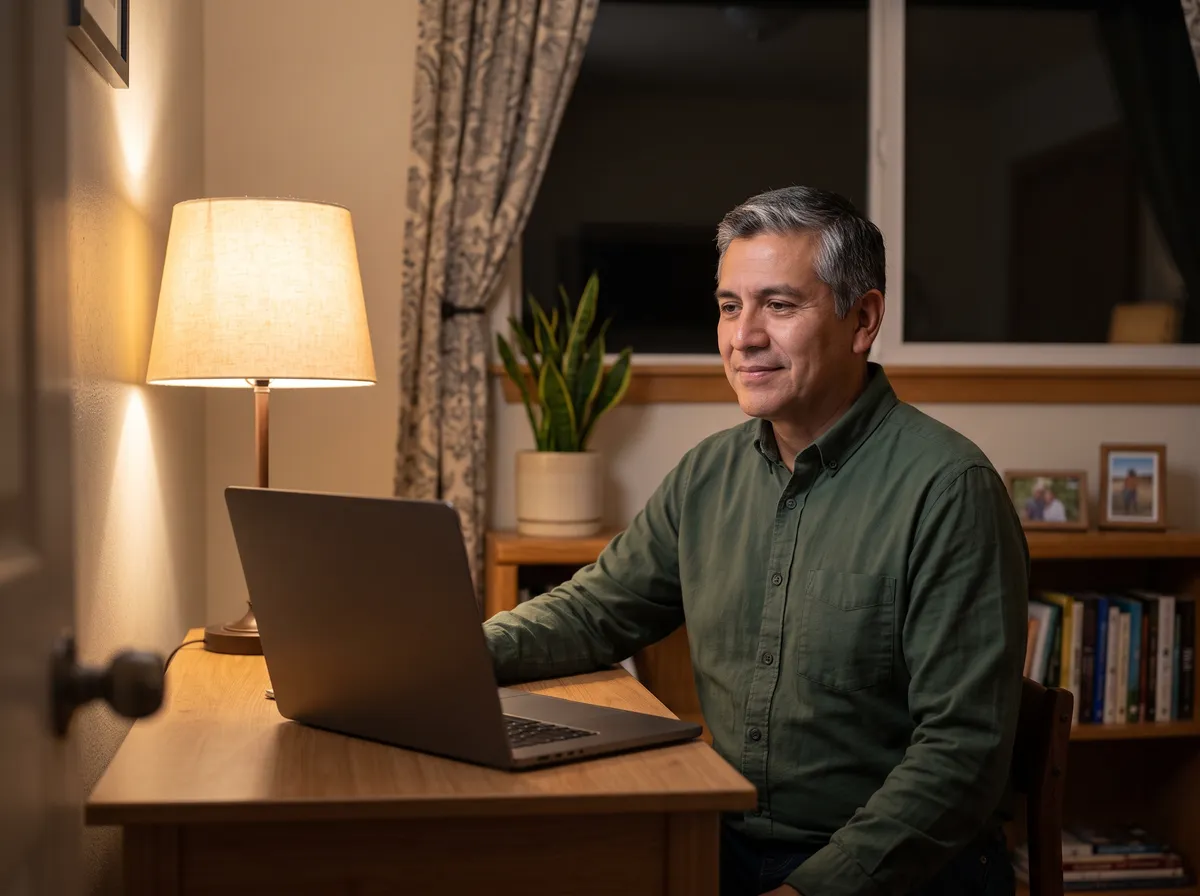
Sessions run over secure, HIPAA-compliant video with your clinician and your group. You need to be physically located in Wyoming during treatment. What is said in the room stays in the room, exactly as it would in one of our offices.
In session
What a week actually looks like.
Sessions run three to five days a week, morning or evening, which is what makes the program survivable alongside a shift rotation, a ranch, or school pickup. Nothing is pre-recorded. You join a live room with the same people every week, and that steady group is a large part of why the format holds up at all.
Each week sets individual therapy with your primary clinician alongside group sessions with your peers. Clinicians work in cognitive behavioral therapy, dialectical behavior therapy, EMDR, and acceptance and commitment therapy, chosen around what you are actually working on rather than a fixed curriculum. Family sessions run on video as well, which matters when the people closest to you are an hour's drive apart.
- Individual therapy with your primary clinician
- Live group therapy with the same peers each week
- Family support sessions when they will help
- Recovery coaching alongside the clinical hours
- Aftercare planning before you finish
Virtual vs in person
What changes, and what does not.
The clinical content is the same in both formats. What changes is everything around it.
The drive disappears
No highway, no fuel, no half a day gone either side of a session. In a state this size that is often the difference between attending and not.
Winter stops deciding
A storm or a closed road does not cost you a week of treatment. Sessions hold to their schedule regardless of what the highway is doing.
Privacy works differently
Sessions run on secure, HIPAA-compliant video and you attend from a space you choose. In a small town, not parking outside a clinic is its own kind of privacy.
The structure stays
Set session times, three to five days a week, the same commitment as attending in person. Flexible does not mean optional.

Coverage
Know what your plan covers before you start.
Most major plans cover intensive outpatient treatment. Redpoint verifies your benefits at no cost and explains any out-of-pocket amount before you begin, so your first session is not the first time you hear a number.
Plans differ by state and by employer, so the only reliable answer is the one that comes from checking your specific policy. Send a verification form or call (303) 219-0973 and our admissions team will check it and tell you plainly what it covers.
Service areas
Virtual IOP across Wyoming.
Our Virtual IOP is open to anyone physically located in Wyoming. Find your part of the state below, or call and we will confirm coverage where you are.
Good to know
Virtual IOP questions, answered.
Who is eligible for Virtual IOP in Wyoming?
Is virtual IOP as effective as attending in person?
Do I need to travel to Colorado?
How many days a week will I attend?
How long is Virtual IOP?
Who will I be working with?
Does insurance cover Virtual IOP?
Is my privacy protected on video?
Service areas
Virtual IOP across Wyoming.
Virtual IOP is available to anyone physically located in Wyoming, delivered entirely by secure video. Find your city for what the program looks like where you are.
Browse all 178 Wyoming cities
B
C
F
H
L
M
S
U
We're here when you're ready
Whether you have questions about Virtual IOP or you are ready to start, our admissions team can help. All assessments are free and confidential, and we will tell you honestly if a different level of care fits you better.