Teen programs · Ages 13 to 17
Teen IOP in Colorado
Intensive outpatient therapy three afternoons a week, built so your teen keeps the school day, the team, the job and the people they already have.

Intensive outpatient
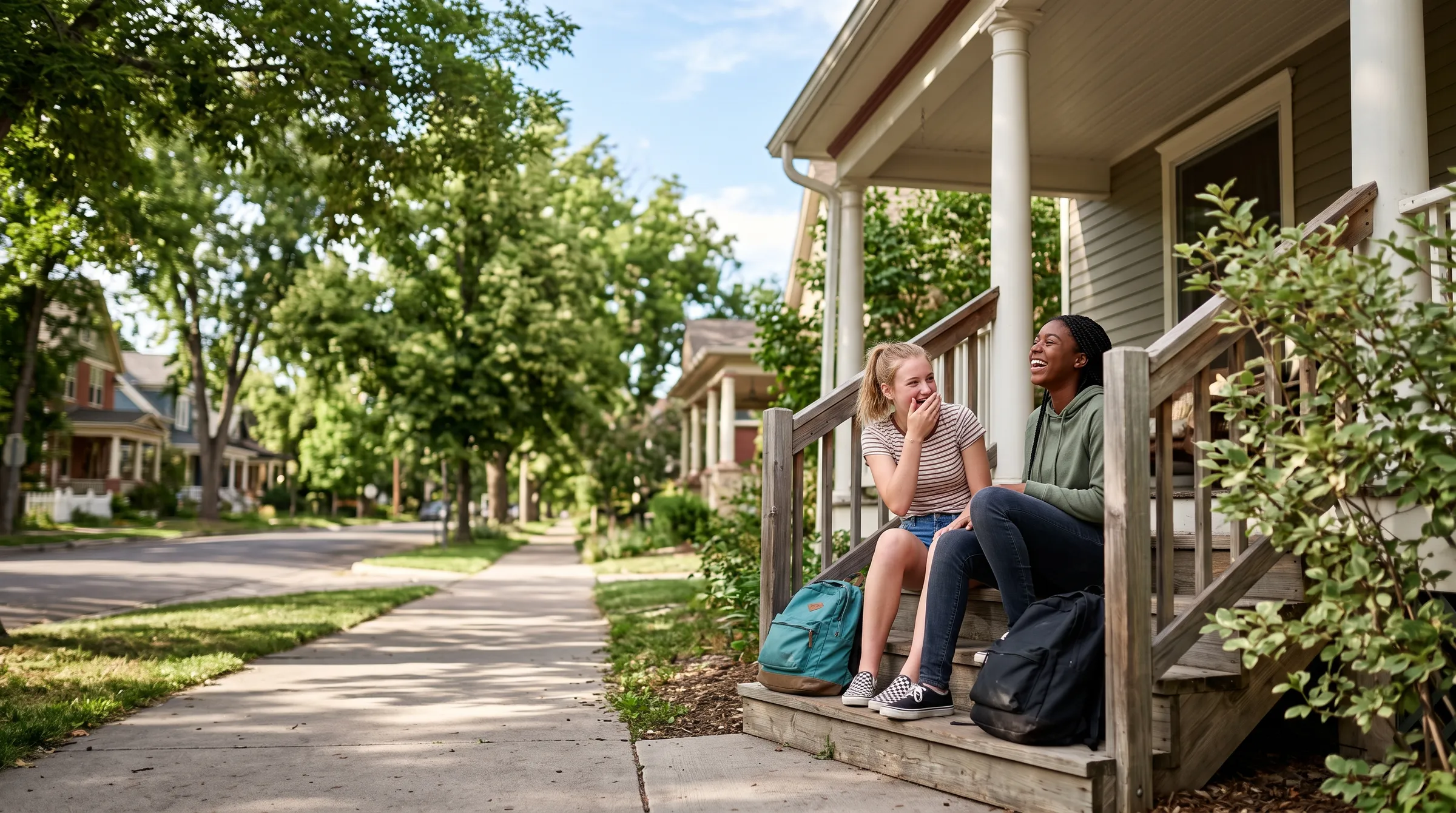
The school day ends, and program starts at four.
A teen intensive outpatient program is structured therapy for adolescents who need more support than a weekly appointment, delivered without taking them out of their own life. Your teen sleeps at home, goes to school in the morning, and comes to program in the afternoon. There is no residential stay and no 24-hour care.
The Redpoint Center runs teen IOP three afternoons a week, 4 to 7pm, for ages 13 to 17. It is the lighter of our two teen programs. Three hours, after the last bell. Practice, shifts, siblings and the rest of the week stay where they are, and that is the design rather than a concession made to it.
The schedule is deliberate. Teenagers do most of the real work between sessions, in the house and the hallway where the problem actually happens, and a program built around the school day gives them somewhere to bring it back to. A skill gets named on Monday and tested by Wednesday, which is the part a weekly appointment cannot reach.
Teen IOP runs out of our Boulder and Thornton offices. Availability varies by location, so call and we will tell you what is actually running near you rather than what is theoretically offered.
- Ages 13 to 17
- Three afternoons a week, 4 to 7pm
- Group, individual, and family therapy
In session
What the three hours are made of.
Individual Therapy
One-on-one sessions with a dedicated therapist, for personal goals and the things a teen will not say in front of a group.
Group Therapy
Peer sessions where teens work through versions of the same problem, and practice social skills somewhere it is safe to get them wrong.
Family Therapy
Scheduled sessions to improve communication, address the patterns in the house, and teach parents to support the work rather than police it.
Skills Workshops
Direct instruction in emotional regulation, distress tolerance, stress management and communication. Named, practiced, taken home.
Experiential Therapy
Art, movement and recreation, because teenagers often open up through doing something rather than sitting across a desk from an adult.
Academic Support
Coordination with your teen's school so treatment and coursework are not competing for the same afternoon.
Levels of care
Teen IOP, or teen PHP.
Both teen programs draw on the same clinical team and the same methods. What separates them is how much of the week treatment takes, and which one fits is a clinical question that the assessment answers rather than something you should have to decide before you call.
Most structured
Teen PHP
A full clinical day
Daytime, on a schedule set at assessment
Takes it. A conversation with your school comes first.
When a few afternoons a week are not enough
Often steps down into teen IOP
Lighter of the two
Teen IOP
Three afternoons a week
4 to 7pm, after the last bell
Untouched. That is the point.
When weekly therapy is not enough and home is safe
Steps down to continuing outpatient work, same team
IOP is not only a step down. It is just as often a step up from weekly therapy once that stops being enough, and the assessment is what tells you which one you are looking at.
How we work
What we actually do with the hours.
Every teen gets a plan built around their own strengths rather than a fixed curriculum handed out at intake.
The clinical work is named rather than vague. Our teen groups draw on cognitive behavioral therapy, dialectical behavior therapy and acceptance and commitment therapy, alongside psychodrama, Internal Family Systems, art therapy, motivational interviewing and trauma-informed practice. The group curriculum is built to be interactive, because a bored teenager is a teenager who is not telling you anything.
Family therapy is scheduled work here, not an optional evening bolted on at the end, and that is a clinical decision rather than a courtesy. SAMHSA's treatment protocol for adolescents with substance use disorders puts it plainly: data support the link between changes in central aspects of family functioning and changes in the substance-using and problem behaviors of the adolescent. Your teen goes home to the same house every night of this program, so the house is part of the plan. We also run a support group for the parents of teens in our programs, which is where the honest conversation about what this is actually like tends to happen.
Teens here work with licensed counselors and clinical social workers, and the teen program has its own clinical leadership rather than an adult team covering an afternoon. Alongside talk therapy the week makes room for mindfulness, creative expression and recreation, because teenagers tend to open up through activity and metaphor rather than a long sit-down. Where a teen has a talent or a passion, we build on it. The strengths-based approach is not a slogan on this page, it is usually the only lever that moves a fifteen-year-old.
Does it work? Outpatient care at this intensity has a real evidence base for exactly the problems families bring us. A 2024 study of an adolescent intensive outpatient program in JAACAP Open found that symptoms of depression and anxiety both fell significantly across weeks spent in the program, with the share of patients meeting the clinical cutoff for depression falling from 85.2% at intake to 55.3% by the final visit. That is one program rather than a promise about your teen, and we would rather give you the real number than a reassuring one.
Conditions
When teen IOP is usually the right call.
Teen IOP is generally the fit when your teen needs more than a weekly appointment and can stay safe at home. These are what parents are describing when they call us.
Trauma or PTSD
Something that happened is still setting the terms, months or years later.
Self-harm behaviors
Cutting or burning, which families usually discover rather than get told about. If your teen is in immediate danger, call or text 988 first.
School avoidance
The mornings that have become a negotiation, and the absences that are now their own problem.
Family conflict and social withdrawal
The same argument on a loop, or a teen who has quietly stopped seeing anyone.
Starting
How a teen actually starts IOP.
- 1
You call, or send the form.
Tell us what the last month has looked like. You do not need a diagnosis, a referral, or the right vocabulary. What you have noticed is the useful information.
- 2
A clinical assessment.
We meet your teen, and we meet you. The point is to work out whether IOP is the right intensity, and sometimes the honest answer is that it is not. We would rather say so now than after enrollment.
- 3
We fit it to the actual week.
Which afternoons, how the 4 to 7pm block sits against practice, work and the bus, and what we will need from your teen's school. Logistics get solved here rather than assumed.
- 4
Your teen starts, and family sessions are already booked.
Group and individual work begins that week. Family sessions are scheduled from the start rather than offered later, and the plan changes as your teen does.
Parent questions
What parents ask about teen IOP.
How long will my teen be in IOP?
Is PHP or IOP better for a teen?
Will my teen miss school?
What happens when IOP ends?
What is the parent support group?
What if my teen does not want to go?
Does insurance cover teen IOP?
Where is teen IOP offered?
What if this is an emergency right now?
Tell us what the afternoons have been like.
You do not need a diagnosis or the right words. Describe what you have been seeing, and we will tell you whether teen IOP is the right level of care, including when it is not.