
Teen dual diagnosis · Ages 13 to 17
Teen dual diagnosis treatment in Colorado, when it is both at once.
Outpatient care for ages 13 to 17 in Boulder and Thornton, for teens carrying a mental health condition and substance use together. Both get treated here, by one team, in one plan. Start with an assessment.

Understanding Dual Diagnosis
Two conditions, one teenager, and a question you can safely set down.
Dual diagnosis is the plain name for two things running at the same time in the same young person: a mental health condition and substance use. MedlinePlus defines it exactly that way, as having both a mental disorder and a substance use disorder. In a teenager that usually arrives as one visible problem and one that nobody has named yet.
It is not a rare or exotic combination at this age. NIDA puts it directly: adolescents with substance use disorders have especially high rates of other co-occurring mental disorders, including mood and anxiety disorders, conduct disorder, and attention deficit/hyperactivity disorder. If your teen is using and also struggling, you are in the ordinary case rather than the complicated one.
Nearly every parent arrives asking which came first, and it is worth saying early that you do not have to answer it. MedlinePlus notes that it can be hard to work out which came first, and that one appearing first does not mean it caused the other. Both directions are real and they often run at once. Some teens drink or use to blunt a low mood or quiet anxiety, and the substances then deepen exactly what they were used to fix. Substance use can also bring symptoms of its own that were not there before: heightened anxiety, mood swings, paranoia, memory problems.
What the question does change is the plan, and the answer there is not sequential. MedlinePlus is plain that with a dual diagnosis it is usually better to treat both conditions at the same time rather than separately, and NIMH says the same of adolescents in general: the earlier treatment is started, the more effective it can be. Waiting to see which one settles down first is the most common way families lose a year.
- Ages 13 to 17
- Boulder and Thornton
- One team, one treatment plan
Co-occurring conditions
What it usually looks like at fifteen.
Any mental health condition can pair with any substance, and the pairing changes what treatment leads with. These are the ones that turn up most in adolescence, and in each of them the two halves are doing something to each other.
ADHD and self-medicating
A teen whose attention and impulse control were never properly managed finds something that takes the edge off. Managing the ADHD well removes the reason to reach for it.
Behavior that reads as defiance
Rule-breaking, risk-taking and legal trouble are among what NIDA names as co-occurring with adolescent substance use. Families are usually months into a discipline conversation before anyone asks a clinical question.
Symptoms the substance brought with it
Anxiety, mood swings, paranoia or memory problems that were not there a year ago. Here the mental health side is downstream, and it still needs treating rather than waiting out.
Warning signs
The signal is rarely one problem getting worse. It is two moving together.
No single item here proves anything on its own, and your teen will have an explanation ready for every one of them. What matters is the pattern, and specifically that two things are moving at the same time: the mood or the anxiety, and the using. If your teen is talking about suicide or self-harm, or is unsafe right now, call or text 988 before anything else on this page.
Bloodshot eyes, dilated pupils, or a smell you cannot place
Secretiveness and dishonesty that arrived alongside the low mood, not before it
A drastic change in friends, with the old group dropped at once
Grades and attendance falling faster than the mood alone would explain
Mood swings past the normal teen range, and worst the day after
Substance-related paraphernalia found at home
Money or valuables going missing
Legal trouble or risk-taking that is new for your teen
Sleep and appetite at either extreme, and headaches or stomachaches with no cause found
Withdrawal from everything at once, or talk of death, suicide, or self-harm
How we treat it
Both conditions, one team, and one plan rather than two.
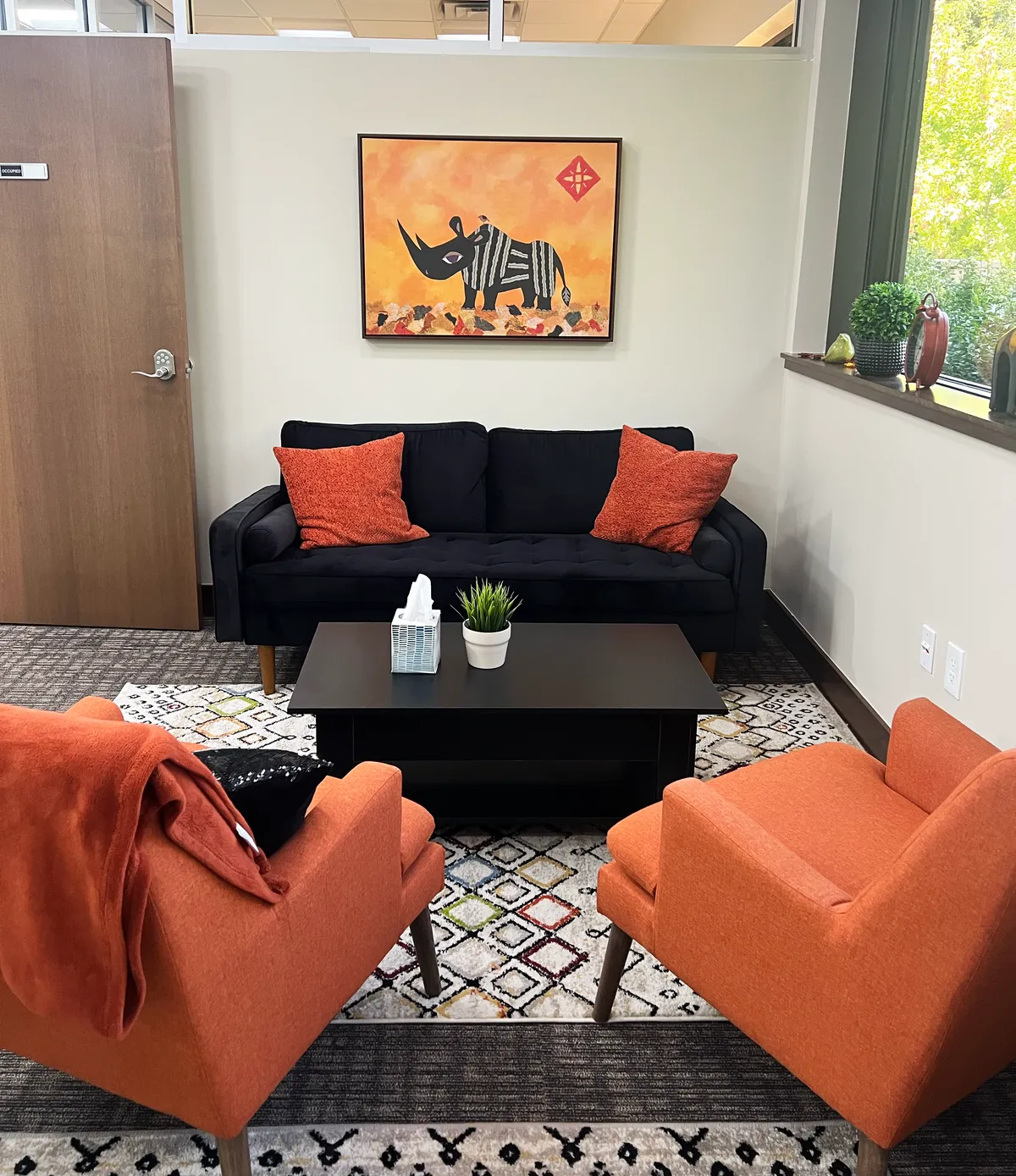
Nothing gets planned before your teen is assessed, and the assessment covers both halves in one sitting rather than two. We go through the substance use history, what they are using and how often and for how long, alongside physical health, mental health, family dynamics, and anything already running at school or with the courts. Part of what that establishes is which of these we are actually looking at, since experimentation, misuse and dependence are three different problems with three different plans. Safety comes first in that appointment rather than last.
Then both conditions are treated together at The Redpoint Center, by one team, in one plan. We do not silo mental health and substance use into separate tracks and ask your family to run them in parallel, and NIDA is clear about why: integrated treatment leads to better health outcomes for people with substance use and other mental disorders. In practice it looks specific rather than philosophical. A teen with ADHD who is smoking every afternoon gets better ADHD management as part of the same plan, so that the thing they were self-medicating stops asking to be medicated.
The therapy is named work. Cognitive behavioral therapy for the thinking that keeps both halves running, dialectical behavior therapy for distress tolerance and emotion regulation, which is what a teenager needs at eleven at night rather than in a Tuesday session, acceptance and commitment therapy for psychological flexibility, EMDR where trauma is part of what the using is holding back, and our experiential therapies including psychodrama and art therapy. Motivational interviewing runs through the substance side, because a teen who has not decided they want this yet is the normal starting position rather than a disqualifying one.
Alongside the therapy hours, teens learn the practical part: what these substances actually do, what tolerance and withdrawal are, and that addiction is a health issue to be managed rather than a moral failing. Then the skills that make that usable, which are refusal skills, coping skills for cravings, and ordinary stress management, so that using is not the only thing on the list when a week goes badly.
We will also tell you plainly that relapse can be part of an adolescent's recovery, because peer pressure and impulsivity do not switch off during treatment. It is planned for rather than treated as a failure of the plan. Care here is medically informed and led by a board-certified psychiatrist, so if medication belongs in your teen's treatment it is evaluated by a clinician who can see both conditions at once. Our teen programs serve ages 13 to 17; for 18 and over, our adult programs run out of the same offices.
- One assessment covering both
- Individual and group therapy
- CBT, DBT, and motivational interviewing
- Refusal and coping skills
- Family sessions on the calendar
- Medication support when it fits
Levels of care
Both programs treat both conditions. The difference is the week.

From a parent
Taylor from Redpoint has been a Godsend for my 16 year old son. She went out of her way to get him into a residential treatment program even when she stood nothing to gain by doing it. She is the epitome of adolescent care and she actually cares. I went through over 9 other service providers before I was fortunate enough to be referred to her by my son's high school counselors.
At home
What the house works on while your teen is in treatment.
Family therapy is scheduled work in both programs rather than an optional evening, and with a dual diagnosis it carries more than usual. Your teen goes home to the same house every night of treatment, which makes the house part of the plan rather than the backdrop to it.
Rules that hold without becoming the whole relationship
Clear boundaries and consequences around substance use, set at a level you can actually keep. The hardest part is holding both halves at once: firm about the using, warm about the kid doing it.
Where support quietly turns into enabling
The line is genuinely hard to see from inside a house, and most families are over it somewhere without knowing which thing crossed it. We work out yours specifically rather than in general.
How to say the hard thing
Communication work for a household where the same conversation has gone the same way for months, and where an honest answer has recently been an expensive thing for your teen to give.
A home that supports recovery
The practical audit. What is in the house, what the evenings look like, who is around after school, and which parts of the week are the ones that reliably go wrong.
Your own stress, which is also real
Parents arrive from months of this, often having been lied to repeatedly by someone they love. Managing that is part of the work rather than a distraction from your teen.
A room with other parents in it
We run a parent support group for teen parents specifically. Nothing else on this list does what an hour with people in the same position does for the feeling that your family is the only one.
Parent questions
What parents ask when there are two diagnoses.
My teen has two diagnoses. Does that mean two programs and two teams?
Which came first, the depression or the drinking?
Our therapist will not treat the substance use and the substance program will not treat the mental health. What do we do?
Is my teen self-medicating, or is this ordinary experimenting?
My teen takes medication for ADHD. Does that change anything?
What happens if my teen uses again during treatment?
Is outpatient enough, or does my teen need residential?
Does insurance cover treatment when there are two diagnoses?
What if this is an emergency right now?
Two problems should not mean two phone calls.
Tell us what you are seeing at home, both halves of it, in whatever words you have. We will help you work out what your teen actually needs and whether this is the right place, including when it is not.